Molecular formula: [AL2(OH)LnCL6-n]m,m≤ 10,n≤ 5
Technical standard: The product quality complies with the national standard GB15892-2009
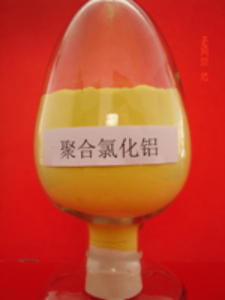
Main features: Compared with other coagulants, this product has the following advantages: 1. Wide application range and strong adaptability to water quality. 2. Can quickly form large flocs with excellent sedimentation performance. 3. The suitable pH range is relatively wide (5–9), and the pH value and alkalinity of the treated water decrease. 4. Can still maintain a stable sedimentation effect at low water temperatures. 5. Higher basicity than other aluminum salts and iron salts, causing less corrosion to equipment. 6. Low corrosion to pipeline equipment; can effectively remove suspended solids (SS), chemical oxygen demand (COD), biochemical oxygen demand (BOD), and heavy metals such as arsenic, lead, and mercury from water. 7. Low water production cost, high efficiency, small dosage, simple operation, and saves manpower and material resources. This product is widely used in the fields of drinking water, industrial water, and sewage treatment.
Physicochemical indicators: This product is an inorganic polymer coagulant. It mainly achieves the purification effect through mechanisms such as compression of the double layer, adsorption neutralization, adsorption bridging, and precipitation net capture, which destabilize fine suspended particles and colloidal ions in water, leading to aggregation, flocculation, coagulation, and precipitation.
Usage method: Mix this product (solid) with normal temperature water at a weight ratio of 1:3 while stirring until it is completely dissolved, then add water to dilute to the required concentration. The diluted solution is best used within 24 hours to avoid hydrolysis that reduces the effective effect. The dosage can be determined according to the different turbidity of the water through coagulation sedimentation tests to find the optimal dosage. Generally, when the raw water concentration is 100–500 mg/L, the dosage is 3–6 mg/L.
Packaging and storage: The solid is packed in 25 kg bags, with a double-layer plastic film inside and a composite plastic woven bag outside. The product should be stored in a dry, ventilated, and cool indoor place. Do not stack (Note: If liquid products are needed, they can be produced as per user requirements).
Note: The mass fractions of impurities such as ammonia nitrogen, arsenic, lead, cadmium, mercury, and hexavalent chromium are all calculated based on 10.0% Al₂O₃.